Tuesday, 8 April 2008

Of sunburns, kites and sands


It’s to the sandy beach again as the March intake’s orientation trip goes all the way to the much wind blowing spot that is Morib. A kite designing competition was to take place on that day and it did.

The rest, I will let the pictures do the talking. . .


A crowd dying to go fly kite

Group sorting session

Rabbit ears group

Full scale senior group

Hiking group

Sun glare on face group

Not paying attention while the photographer is talking group

Degree cum diploma group

Gay group

Lecturer's face says: I'm going to have fine dining tonight

Lecturer's face says: High score within reach

Lecturer's face says: My ice cream melted under extreme heat

Mini act by the juniors

Each group was then handed a plain kite to mark the start of the competition. . .


. . . and designing came soon after


Within a few hours the designing process was completed and each and every group had their share of presenting it to the judges.


Since we were loaded with kites at midday and the wind was strong, we flew kites.


While some were enjoying themselves with the traditional way of flying kites, some tried a different and interesting approach.


The one finger method

While some professionals had their own set of artillery

Not forgetting to mention the amount of kites they can control at once (more outside screen)
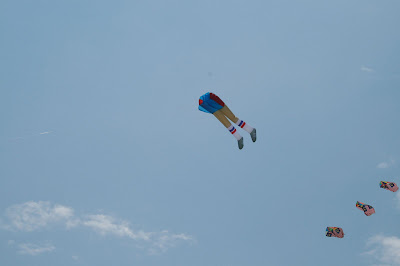
Images like these can be creepy at night (by the way, its a kite)

Prize-giving ceremony to the best design, high flyers and to the organizer


The day ended peacefully. . . until five hooligans decided to throw the friendly photographer into the ocean.


Poor chap, luckily he managed to escape

Special thanks to the event planner Brian Novanto

Sunday, 6 April 2008

STUDENT FEATURE 3


Featured Students: Tee Sing San, Tan Chin Yoong, Wong Kai Chen, Lim Kai Zheng
Course: Diploma in Architectural Technology
Semester: 2
Featured Project: Building Construction 1- A Solid Experience


The Taj Mahal


The dome and the drum of the building are the part to be built for the project. The scale used is 1:150. The material used include MDF blocks represent the bricks for the major structure, balsa wood to mimic the existed ornaments, and craft board for the finial and the lotus.
Basically, Flemish bond and Common bond are used for the bonding system of the brickwork. Flemish bond is used for the drum part of the structure, and the common bond is applied on the dome structure.

The challenges faced during buiulding this Taj Mahal dome include the difficult shape and form that requires accurate calculation, especially the angles, and have to measure the whole structure very often, to make sure the shape of the dome is correct and never distorted.

Besides, breakage happens between the bricks immediately after the shape of the dome is formed. A lot of strength is needed to hold them together, to make sure it never runs out of shape. The quality of the tack, as the bonding agent, plays and important role.

While the most challenging part is that parallel strength has to be remained throughout the whole constructing progress, which is not easy, and any small mistake, the dome might run out of shape, and even worse, it will collapse.

"We choose Taj Mahal because based on our research, it is the finest masonry building. We feel that it is very suitable to be selected for this project. Also, the shape of a dome is not easy to be constructed. If we able to build it, we can be labelled as one of the best group."

-Chin Yoong


What is your intepretation of perfect design?

I would say that a perfect design is just an inhibition for the design. Whereas, a good design is somehow different from a perfect design in the sense that it should meet the fundamental yet contains spaces for further improvement.
-Chin Yoong


Nothing tends to be perfect. It depends on one's perspective to consider whether a design is superior or awful. Creativity is not enough when designing a project, other facet such as target ussers and spaces composition should also take under consideration to come out with a successful design. For me, a design which is accepted by the mainstream is considered as a successful design.
-Kai Zheng


A design with strong argument and reason behind it, I name it as a perfect design.
-Kai Chen


Perfect is everything and everything is perfect as well. So, to me, a perfect design is 100% design which you think the design is perfect in all aspects.
-Sing San

Breathless Enthusiasm on Building Construction


Before the Chinese New Year as we, architect students of semester 2, are noisily fooling around the class waiting for our Building Construction 1 lecturer, Miss Suja, to enter the class. But what we are not expecting is that day Miss Suja is actually going to give us a extreme stressful and difficult task to fulfill the requirement for our subject. With a great big smile, she loudly announced that we should make a model of an already existing building. Our model must be built out of 20 x 10 x 9 mm MDF blocks.

As first we were surprised – I mean how are we going to build a model of a whole building with just small wooden blocks? It’s just too absurd! After a clear explanation and briefing from Miss Suja, we felt relieve because we can take a part of the building and make a model out of it.

We felt anxious because this is different from all those assignments we had done before in our course. Without a moment of hesitation, almost everyone in the class proceed to come out with an idea on what sort of building they should use and how they can construct it in an efficient and time-saving way.

The main reason why we should do this assignment is to demonstrate a convincing understand of how solid construction works, to exploit the qualities inherent In solid construction and also to be able to manipulate solid construction to solve an oblique design problem.

After deciding on a particular building, we immediately went and look for second-hand wooden bricks because it will reduce our cost a lot from purchasing these materials. To construct the model, it is common sense to purchase tools such as saw, hammer etc to make our work of progress more efficient. Some groups even bought a drill to drill holes through the bricks so they can put steel wires through it to use it as a reinforcement bar. The only thing we did not expect is most of the groups, including mine, actually do not have enough bricks and white tack to build our model when it’s near completion!

After the completion of the model, we are require to produce a portfolio and present our model to the whole class.

The pictures below are some of the models constructed by us.


Dome of Taj Mahal - 6*** Bricks

Flying Buttress of Chartres Cathedral- 8*** Bricks


Stari Most Bridge- 5*** Bricks


Magedeburg Monastry of our Lady- 7*** Bricks


Castel Del Monte- 2*** Bricks

Thursday, 3 April 2008

ALERT : Change of booth competition submission dates


Submission for stage 1 is now on 17th April (originally 10th April)
For this stage, all the groups need to submit sketches of booth conceptual ideas, choices of materials, ways of displaying models and storyboards in the booth. Also,please include relevant informations and details of the booth.

Submission for stage 2 (only for the
selected 5 teams) is now on 23rd May - after final exams (originally 30th April)
For this submission, the 5 groups will need to come up with drawings, models, storyboards, Gantt charts etc.
PLS REFER TO THE (READ ME)POSTER

Other than AT and ID students, each team will need to have AT LEAST 1 QS participant, while CM students are most welcomed to take part as well. This competition is something like integrated project where participants learn to work with one another from different study background/course. AT/ID students will learn about quantities, materials and budget from their QS partners and vice versa.


The champion team will receive RM 1000 while there are 4 consolation prizes, each with
RM 300 and other rewards..

The champion team's booth will be used for edufairs, roadshows, PAM camp, PAM exhibitions etc to represent SABD TAYLORS.

The judging panel of this competition consists of Ms Shereen Effendy Lee, Mr Cheah Khai Kid and Mr Tony Liew.

Those interested please register first by email, to sabd.ss@gmail.com. Please include your names, ID and your course.
There are feedbacks that some students interested in this competition do not know of any QS students, thus we will help look out for QS students who are interested in this competition for the groups. So please just register first even whithout QS participants.


Any enquiries, please leave us a comment, or emails us and there's always the chatbox.